

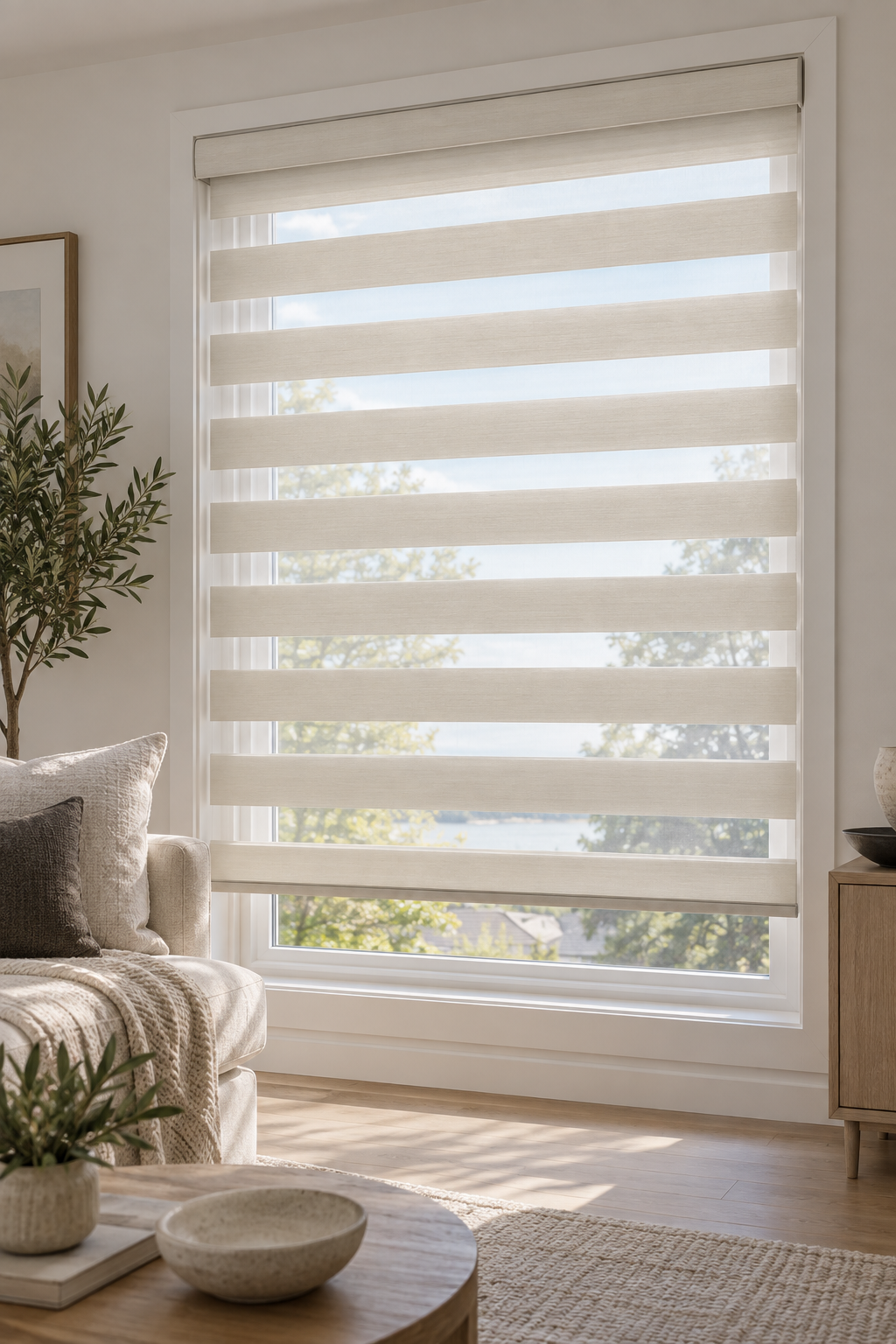
These motorized blinds scheduling ideas use fixed times, sunrise or sunset triggers, grouped scenes, or compatible smart-home routines, depending on the selected system. The most useful schedules match the room’s purpose and window exposure: bedrooms can open gradually in the morning, living rooms can reduce glare, and offices can coordinate privacy and screen comfort. Start with one or two routines, then adjust them as daylight and household hours change.
Start with the routine, not the technology
A useful schedule solves a daily problem. You might want bedroom blinds to open after your alarm, living-room shades to reduce afternoon glare, or office coverings to close before a presentation.
Motorization controls how a blind operates. It does not decide the blind’s opacity, material, fit or mounting position. Lavish Blinds plans motorized options around the shade type, number of windows, power approach and control preferences.
Observe the room for several typical days before automating it. Note when privacy matters, when sunlight reaches the glass, when screens become difficult to see and when people usually enter or leave.
Choose the scheduling method that fits your day
Motorized blinds can have a timer when the selected motor and control system support recurring schedules. Available triggers vary by system and can include fixed times, sunrise, sunset, scenes or compatible smart-home automation.
| Scheduling method | Best for | Watch for |
|---|---|---|
| Fixed time | Dependable home or office routines | Daylight and habits change by season |
| Sunrise | Opening coverings with morning daylight | It may occur too early for sleepers |
| Sunset | Closing street-facing windows as light fades | Privacy may be needed before sunset |
| Scene | Several coverings moving in a planned combination | One scene may not suit different exposures |
| Group | Controlling shades together by room or function | A single group can create glare or darkness elsewhere |
Fixed times suit stable routines. Sunrise and sunset triggers follow daylight more closely, while scenes and groups work well when several coverings share a purpose. For rooms with several windows, coordinated motorized blinds can reduce repeated manual adjustments.
Bedroom scheduling ideas for sleep and privacy
Bedroom schedules work best when they separate waking, daytime privacy and evening room darkening. A gradual morning opening can let in daylight after your usual wake time, while an evening routine can close street-facing windows before indoor lights make the room visible. Related reading: UV Protection Tint Benefits: What to Know Before Choosing Car Window Film.
- Weekday morning: Open to a privacy position at your usual wake time, then fully after 15 to 30 minutes if you prefer a gentler transition.
- Daytime: Keep the covering at a privacy position if the room faces a walkway, neighbouring home or busy road.
- Evening: Close the blind at a consistent time or before the household’s usual lights-on period.
- Weekend: Use a later opening time instead of applying the weekday routine every day.
Timing alone will not create blackout performance. Light entering around the edges depends on the covering, opacity, mounting position and fit. Motorized operation closes the treatment consistently, but the treatment still needs to suit the room-darkening goal.
Living-room schedules for glare, daylight and privacy
Living-room schedules should follow window direction and how the space is used. Morning light may be welcome through east-facing glass, while afternoon sun through south- or west-facing windows can create glare on a television, laptop or seating area.
- Morning: Leave coverings open or partly open if daylight is useful and privacy is not a concern.
- Midday: Lower or angle coverings receiving strong direct sun.
- Late afternoon: Use a separate west-window group if the rest of the room still benefits from daylight.
- Evening: Close street-facing windows before indoor lighting makes the room more exposed.
Do not give every window in an open living area one blanket schedule. South-facing and north-facing glass can need different positions at the same time.
If your routine centres on predictable light control, motorized roller blinds can provide a streamlined operating option. Opacity and mounting still depend on whether your priority is filtered daylight, privacy, glare reduction or darkness.
Open-plan and hard-to-reach windows: use groups and scenes
Groups and scenes are most useful when they reflect how the space is used. In an open-plan room, group windows by exposure or function rather than simply grouping every nearby covering.
A morning scene might open north-facing coverings fully, leave east-facing coverings partly open and keep a street-facing window at a privacy position. A midday scene could lower only the shades receiving direct glare. An evening scene could close the privacy group while leaving a reading area more open.
Tall windows, skylights and several coverings across a large room can benefit from coordinated control, provided the power and control arrangements suit the installation. Name groups by function, such as “west glare,” “bedroom privacy” or “meeting room,” instead of using vague labels.
Office scheduling ideas for focus, privacy and presentations
A small Oakville office should choose motorized or smart blinds around staff routines, screen glare, meeting privacy and shared control. The key question is which windows need to move together and who should be able to change the routine.
A practical schedule could open the main workspace shortly before staff arrive, lower west-facing coverings during strong afternoon glare and close private-office or meeting-room coverings at the end of the workday. A presentation scene might lower selected shades while leaving circulation areas bright.
Shared spaces need a control plan that does not depend on one person’s phone. Ask whether staff need a dedicated remote, compatible smart-home control, grouped operation or a simple non-scheduled method for occasional changes.
Review holidays, weekends and meeting days before applying a fixed weekday schedule. A routine that works on Tuesday can be inconvenient when the office is empty or a presentation starts earlier.
A worked weekday example you can adapt

The following is a hypothetical Oakville home and small-office example, not a client project. It shows how room groups can reduce repeated adjustments without forcing every window into one routine.
| Time or trigger | Group | Routine | Reason |
|---|---|---|---|
| 7:00 a.m. weekday | Bedroom | Open to a privacy position | Allow daylight without immediate exposure |
| 8:00 a.m. | Living room | Open north-facing coverings; leave east-facing coverings partly open | Keep daylight while limiting glare |
| 1:00 p.m. | West-facing windows | Lower to a glare-reducing position | Support screen visibility and comfort |
| 30 minutes before sunset | Street-facing windows | Close to the selected privacy position | Reduce evening exposure |
| End of office hours | Office | Close meeting-room coverings | Support privacy without darkening every area |
Before setting these routines, confirm measurements, mounting conditions, power approach and control method. Review the motorized blinds installation process so fitting and operation checks are included in the plan.
Check these details before creating schedules
To program motorized blinds, identify the control method, assign coverings to useful groups and create one routine at a time. Exact programming steps vary by product, motor and control setup.
- Map the windows: Record direction and note tall, high or obstructed openings.
- Define the purpose: Identify whether each group serves privacy, daylight, glare reduction, sleep, work hours or convenience.
- Choose groups carefully: Keep windows together only when they share exposure and use.
- Confirm control: A dedicated remote, automated control and compatible smart-home option are not interchangeable.
- Review power: Confirm how the motor is powered and what happens if power or connectivity is interrupted.
- Check compatibility: Confirm that the motor, control equipment and smart-home arrangement work together.
- Retain manual control: Keep a straightforward way to adjust coverings for meetings, guests, holidays or unusual weather.
- Test movement: Check clearance, coverage, glare, privacy and noise at the intended times.
Start with a morning opening and evening privacy scene. Observe them for several days before adding a midday glare or work-hours adjustment.
What scheduling does not solve
Motorized blinds control movement, but scheduling does not automatically create blackout conditions, insulation, energy savings or security protection. Those outcomes depend on the covering, material, opacity, fit, mounting position, window and room use.
A scheduled roller blind can close at sunset and still allow light around its edges. A motorized light-filtering shade can move precisely without becoming a blackout shade. Closing coverings while you are away can support privacy, but it is not guaranteed home security.
The main downsides are practical: fixed times can become inconvenient, sunrise and sunset change through the year, separate windows may need different positions, and systems can have limits around compatibility, power or connectivity. A broad group can also move coverings while someone is sleeping, presenting or enjoying daylight.
Review seasonal routines instead of assuming one setting will suit the whole year. Daylight-based triggers follow outdoor conditions, while fixed times remain better for stable office starts or sleep schedules.
Fine-tune the routine after a week of real use
After a week, note every unwanted movement. Record whether glare appears before the adjustment, privacy closes too late, a bedroom opens too early or one window should leave its group.
Change one variable at a time. Move the trigger by 15 or 30 minutes, split a group by exposure, change a full opening to a partial position or replace a fixed time with a daylight-based trigger.
Motorized blinds are most worthwhile when they remove a repeated inconvenience, such as reaching high windows, adjusting several coverings or managing predictable glare and privacy changes. If you are planning those routines in Oakville, Lavish Blinds can help you compare suitable motorized blinds and smart shades with your window type, control preferences and installation conditions.