

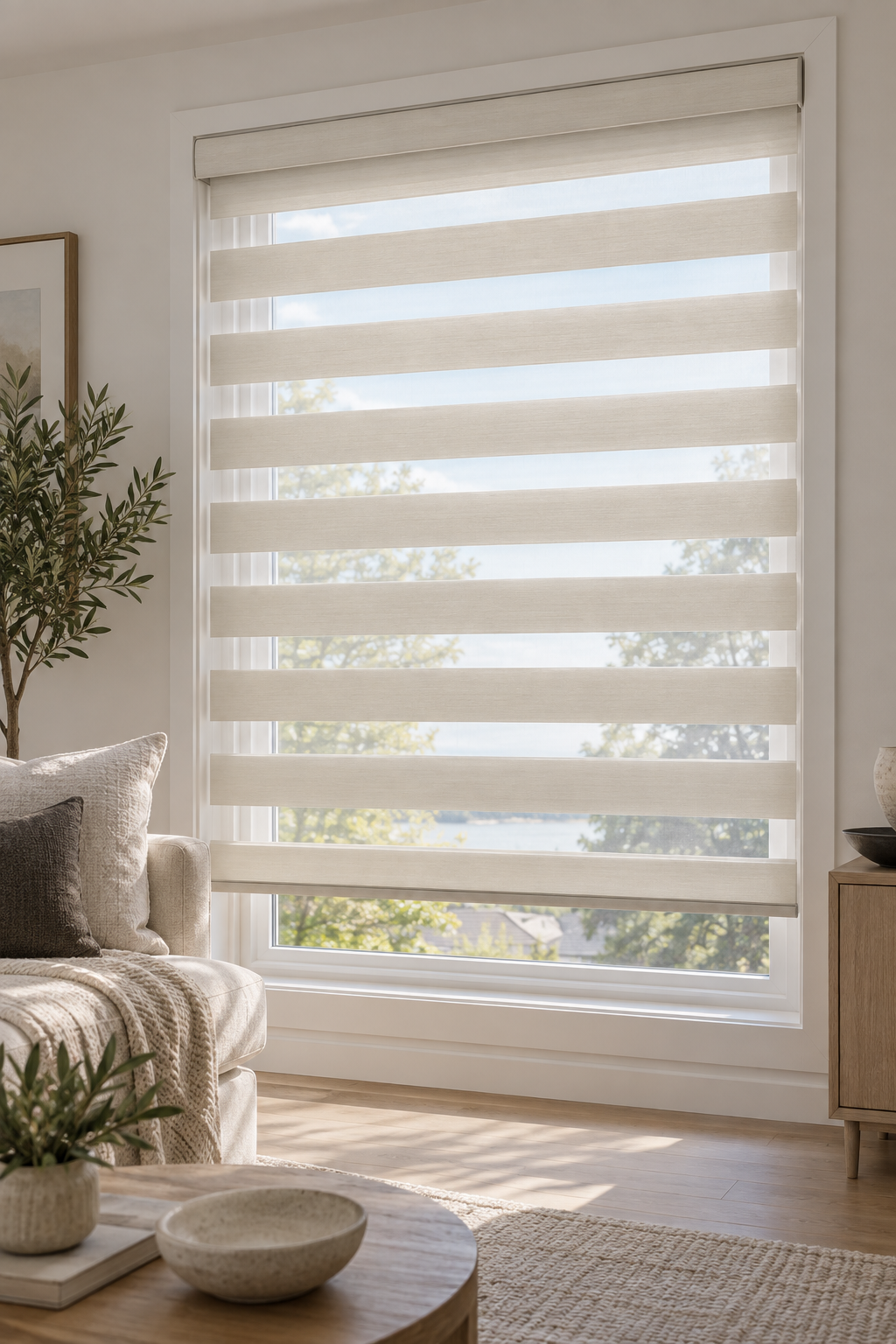
The most useful energy-efficient shade depends on the problem at your window. Cellular or honeycomb shades are a strong starting point for seasonal temperature discomfort because their honeycomb structure creates an insulating air pocket. Solar shades suit sunny windows where glare and heat are the priority. Fit, mounting, window condition and daily operation affect the result as much as the product category.
In Oakville, window coverings can support winter comfort and reduce summer solar gain, but they supplement the window assembly. They do not guarantee lower energy bills or repair a failed seal, defective frame or true air leak.
What makes a shade energy-conscious?
An energy-conscious shade creates another layer between the room and the glass. During the heating season, that layer can help reduce radiant heat loss. In summer, closing an appropriate covering can limit unwanted solar gain and glare. Natural Resources Canada describes blinds, shades and curtains as an additional barrier that can help with both effects. Source: Keeping The Heat In - Section 8: Upgrading windows and exterior doors - Natural Resources….
There is no reliable bill-saving percentage for every Oakville home. Window orientation, glazing, frame condition, air leakage, room temperature, shade coverage and operating habits all change the outcome. Windows and doors can account for up to 25 percent of a home's energy loss, but that figure relates to the window and door assembly, not to a guaranteed result from interior shades. Natural Resources Canada explains window performance and energy loss.
Fit and operation are practical performance factors. NRC guidance notes that effectiveness depends on the covering type, how closely it fits and how it is operated. A well-selected shade with large side gaps may provide less comfort than its category suggests, while a properly fitted shade that is rarely closed cannot manage sunlight or night-time heat loss.
Cellular, solar, blackout, Roman and sheer shades compared

There is no universal winner among energy-efficient shades. Cellular shades generally deserve first consideration for seasonal temperature discomfort, solar shades suit glare and sunny exposures, and blackout shades prioritize darkness and privacy.
| Shade type | Best comfort role | Strengths | Trade-offs |
|---|---|---|---|
| Cellular or honeycomb | Winter comfort and uncomfortable windows | Honeycomb cells create an insulating air pocket; fabrics range from softly filtering to room darkening | Close measurement and suitable mounting matter; the shade cannot fix an air leak |
| Solar | Summer glare and sunny windows | Softens direct sunlight while preserving some outdoor connection; openness balances daylight and view | Privacy and darkness vary with openness, lighting and time of day |
| Blackout | Bedrooms, nurseries and media rooms | Opaque fabric blocks light through its surface and supports privacy | Edges and mounting determine darkness; blackout is not automatically insulated |
| Roman | Decorative rooms | Fabric, lining and fold style coordinate with the room | Performance depends on construction, lining, coverage and fit |
| Sheer | Filtered daylight and daytime privacy | Translucent fabric and vanes balance softened light, views and privacy | Not the first choice for strong room darkening or maximum insulation |
Cellular shades for seasonal comfort
Cellular shades are often the most direct fit for a draft-prone or seasonally uncomfortable window because their honeycomb structure creates an air pocket at the glass. Lavish Blinds offers cellular shades in Oakville for bedrooms, nurseries and windows affected by seasonal temperature changes.
Choose opacity around the room's use. Softly filtering fabric can keep a living space bright, while room-darkening fabric may suit a bedroom. Neither option should be treated as a guaranteed insulation rating without a specific product specification.
Solar shades for glare and sunny exposures
Solar shades are a better starting point when the complaint is harsh daylight, screen glare or summer heat near a large pane. Solar shades use openness levels to balance filtered daylight, outdoor view and indoor comfort. They are relevant to south- and west-facing windows, offices, media spaces and garden doors.
The more view you preserve, the more carefully privacy expectations need to be discussed. A fabric that feels private during bright daylight may offer a different result at night when the room is lit.
Blackout shades for darkness and privacy
Blackout shades are designed around light control, not an automatic promise of thermal performance. Lavish Blinds provides custom blackout shades for bedrooms, nurseries and media rooms, with depth, mounting position and side-light expectations reviewed during consultation.
An opaque shade can block light through its fabric while bright lines remain at the edges if it is undersized or mounted where light can pass around it. If winter comfort also matters, compare blackout construction with cellular or lined alternatives.
Roman and sheer shades for comfort plus appearance
Roman shades suit living and dining rooms where the covering is part of the décor. Fabric, lining and fold style affect appearance and light control, so a lined Roman shade may be worth comparing with cellular coverage when visual warmth matters as much as seasonal comfort.
Sheer shades suit rooms needing softened daylight and adjustable privacy. They are useful when preserving a daytime view matters more than room darkening, but they are not the strongest choice for a cold window or media room.
Match the shade to the season and window direction

For sun-facing windows in Oakville, identify whether the main problem is winter heat loss, summer heat, glare or privacy. South-facing windows can receive strong daytime solar gain, west-facing windows often bring difficult afternoon glare and heat, east-facing windows need morning-light control, and north-facing windows usually call for more attention to winter comfort than overheating.
- Winter discomfort: Begin with close-fitting cellular coverage, then investigate the frame, seal and surrounding trim if you can feel moving air.
- South-facing glass: Compare solar shades when glare and daytime heat lead the decision. Add a separate room-darkening solution if needed at night.
- West-facing glass: Focus on afternoon glare, heat and side light. Opacity and edge coverage determine whether the room remains usable for screens.
- East-facing glass: Consider how morning light affects bedrooms, offices and breakfast areas. Choose opacity around the room's use.
- North-facing glass: Prioritize privacy, daylight and winter comfort. Cellular shades may be more relevant than solar shades.
Glazing, exterior shading, tree cover, room use and frame condition can change the recommendation. The most useful comparison happens at the actual window with samples and a clear discussion of its seasonal pattern.
Choose by room and window type
Bedrooms and nurseries
Bedrooms require a decision between seasonal comfort, darkness or both. Cellular shades suit windows that feel cold, while blackout shades suit sleep and privacy. In a nursery, include the operating method and cord-safety arrangement in the specification.
Living and dining rooms
These rooms often need filtered daylight, privacy and a finished appearance. Sheer shades can soften daylight while retaining an adjustable view, while Roman shades add fabric texture.
Home offices and media rooms
Solar shades are useful when glare on a monitor is the main complaint. Media rooms need blackout coverage, suitable mounting and side-light control.
Large windows, garden doors and skylights
Large panes magnify glare and can be harder to operate consistently. Solar shades suit a clearer daytime view with less glare, while cellular or room-darkening options may be better when privacy and seasonal comfort lead the decision. For skylights and high windows, discuss remote or automated operation. The control improves access and consistency, not the shade's insulating construction.
Fit and installation matter more than the label
An inside mount can preserve trim and provide a clean recess fit when there is enough depth. An outside mount can help cover the recess and reduce visible side light when the opening, trim or product requires more coverage.
Ask the installer to review window depth, headrail clearance, handles, adjacent walls, frame condition and the shade's path when raised. For blackout applications, side gaps and mounting position directly affect bright lines at night. For cellular shades, a close, even fit supports appearance and practical performance.
Consider a hypothetical example: a west-facing bedroom has afternoon heat, glare and light entering around an undersized shade. Solar coverage may address the bright afternoon period but not provide sleeping darkness. A cellular blackout option or layered solution could better combine comfort and darkness, provided mounting and edge coverage suit the window.
If air moves around the frame, the sash does not close properly or condensation suggests a deeper window issue, record the condition and address it separately.
Does motorization improve energy efficiency?
Motorization does not add insulation. Its main benefits are access, convenience and consistent operation, although a schedule can help close coverings during strong sun or at night.
Before choosing it, ask:
- Can the shade be operated manually if the control is unavailable?
- What power arrangement suits the window?
- Can shades be grouped by room or exposure?
- Would a daily schedule match how the room is used?
- Does installation include control setup and final testing?
A schedule that closes a west-facing shade before afternoon glare may improve comfort by changing operation at the right time. It cannot turn a poorly fitted shade into an insulated one or correct a failed seal.
How to compare cost and value without a made-up price
Custom pricing depends on the project. Main variables include window quantity and size, shade category, fabric or lining, mounting conditions, unusual shapes, control method, measurement requirements and installation scope.
Online or retail buying can suit standard openings and confident DIY measuring. Local custom service becomes more valuable for unusually wide, recessed, high, angled or difficult-to-access windows, or when you need samples viewed in actual light. Compare quotes line by line, including construction, opacity, mount type, operation, measurement, installation, control setup and testing. Related reading: Elantra rear ceramic window tinting.
Oakville consultation checklist
Bring the comfort problem, not just a preferred shade name, to an in-home consultation:
- Which direction does each window face?
- When does the room become too hot, cold or bright?
- Is the concern radiant chill, air leakage, glare, privacy or darkness?
- What glass, frame and trim surround the opening?
- Would an inside or outside mount provide better coverage?
- What opacity, openness or lining suits the room?
- Where will side gaps appear?
- Will operation be manual, remote or scheduled?
- What does the quote include for measurement, installation, setup and testing?
Ask Lavish Blinds about made-to-measure options, measurement, quoting and installation for your Oakville windows. The team can compare cellular, solar and blackout approaches around the actual window.
FAQ: Energy-efficient shades in Oakville
Can shades fix a draft around an Oakville window?
No. Shades can add an interior barrier and improve perceived comfort, but moving air usually points to a seal, frame, sash or surrounding construction issue.
Are blackout shades the same as thermal shades?
No. Blackout describes light control through the fabric. Insulating performance depends on construction, fit, coverage, window condition and operation.
Is it better to buy blinds online or use a local custom installer in Oakville?
Online buying can suit standard windows and confident DIY measuring. A local installer is more useful for complex openings, close coverage, coordinated rooms or professional installation.
How much do energy-efficient shades cost in Oakville?
There is no responsible single price without window sizes, quantity, shade type, fabric or lining, mounting conditions, controls and installation scope. Request an itemized quote.
Do motorized shades reduce energy bills?
Not by themselves. Motorization improves access and consistent operation. Schedules can help close shades during strong sun or at night, but construction, fit, window condition and use determine the effect.
A practical next step for your Oakville windows
Start by recording the main problem at each window: winter discomfort, summer heat, glare, privacy or darkness. Then compare shade type, fit and operating method against that problem before judging a quote by its headline price. For an Oakville assessment focused on seasonal comfort and precise fit, ask Lavish Blinds about cellular shades.