
Choosing between blinds vs shutters is easier when you start with how each room needs to work. Blinds offer more variety, flexible control and a wider range of price points. Interior plantation shutters provide a built-in appearance, sturdy construction and precise privacy control. Neither is automatically best for every window.
For homeowners and condo owners in Oakville, Toronto, Mississauga and the wider GTA, a made-to-measure consultation can also reveal when a third option—such as a cellular shade or blackout shade—is a better fit.
What is the difference between blinds and plantation shutters?
Blinds are window coverings made with horizontal or vertical slats, fabric or layered materials that can usually be raised, lowered, tilted or rolled. Plantation shutters are fitted window coverings with a solid frame and adjustable louvres attached to panels. Blinds are generally more flexible and easier to change, while shutters have a more permanent, furniture-like appearance.
Blinds include roller, Venetian, vertical, wood, faux-wood, Roman, zebra, cellular and blackout styles. Shutters involve more detailed decisions about frame depth, panel layout, louvre size, trim, handles and window operation.
This distinction matters in homes with deep trim, bay windows, patio doors, condo restrictions or furniture close to the glass. A covering that looks good in a showroom still needs to clear handles, cranks, heating vents, sliding doors and nearby furniture.
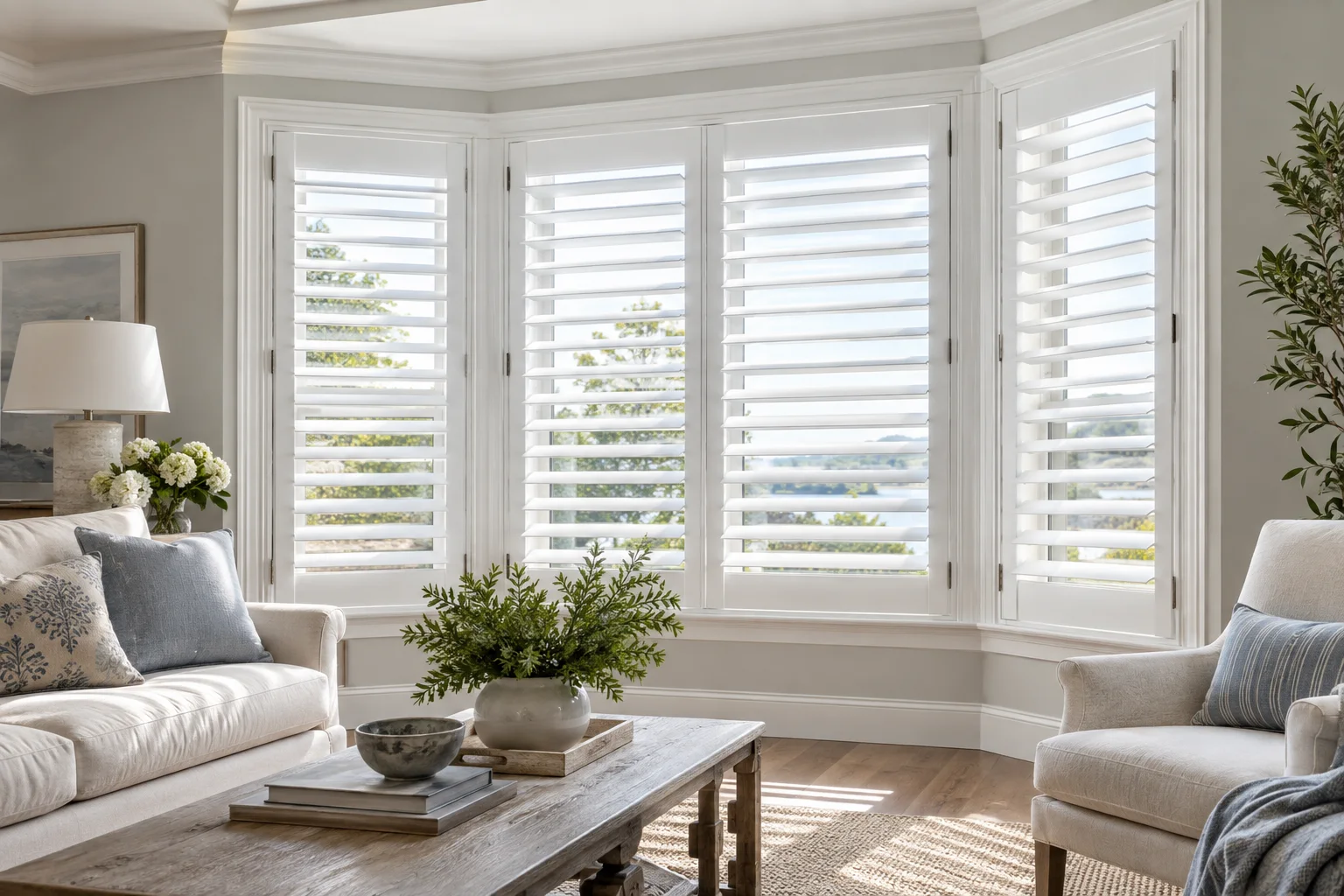
Blinds vs shutters: which is better overall?
Blinds are usually the better overall choice when you want flexible styling, a lower starting cost, easy replacement, motorization or a solution for unusual windows. Shutters are often better when you want a durable architectural look, strong privacy control and a covering that feels integrated with the window. A hybrid plan is often the most practical answer.
| Decision factor | Blinds | Plantation shutters |
|---|---|---|
| Upfront budget | More product and price choices | Usually a higher custom investment |
| Appearance | Ranges from minimal to decorative | Built-in, structured and architectural |
| Light control | Depends on the style, fabric and mounting | Precise louvre adjustment, with possible edge gaps |
| Privacy | Strong options, especially with adjustable slats or layered fabrics | Very good with adjustable louvres and panel coverage |
| Motorization | Available across many styles | Less common because louvres are usually adjusted manually |
| Large openings | Vertical blinds and shades can be practical | Panel weight, stacking and door clearance need planning |
| Changing style later | Generally easier to replace | More permanent and expensive to replace |
Before requesting a quote, compare the available custom window treatments and how each product performs for privacy, darkness, mounting, safety and room use.
How do shutters and blinds compare for cost?
Shutters usually cost more than standard blinds because they involve custom panels, frames, materials and more detailed installation. Blinds offer a broader range of price points, but a custom wood blind, motorized blind or premium shade can also become a significant investment. The final quote depends on window size, quantity, material, configuration, controls and installation.
A basic blind and a made-to-measure shutter are not equivalent products. Ask whether the quote includes measurement, mounting hardware, delivery, professional installation, taxes, motorization and any special frames or cut-outs.
Think about replacement flexibility as well as initial cost. Blinds may be simpler to update if your décor changes or if one covering is damaged. Shutters can make sense when you want a long-term visual feature and are comfortable with a more permanent installation.
Which gives better light control and room darkening?
Blinds and shutters can both control daylight, but neither category guarantees complete blackout on its own. Shutters can close their louvres to reduce glare and direct light, while roller and blackout blinds can provide stronger room darkening when the fabric, side gaps, frame and mounting are planned correctly.
Shutter panels and louvres may still allow small amounts of light around the frame or between components. For bedrooms, nurseries, media rooms and condo bedrooms facing bright streets, compare blackout shades or roller blinds as well as shutters.
Are shutters more energy efficient than blinds?
Shutters may improve perceived comfort near a window by adding another layer between the room and the glass, but they are not a guaranteed energy-saving or draft-correction solution. Insulation depends on window condition, orientation, air leakage, material, coverage, gaps and installation. Cellular shades are worth comparing when insulation is the main goal.
Window coverings can support comfort, but they cannot repair failed seals, poor glazing or building-envelope problems. Ask what the proposed product can realistically do—and what it cannot do.
Which lasts longer, and which is easier to maintain?
Well-made shutters are generally the more durable and permanent option, while the lifespan of blinds varies by material, operating system, window size and daily use. A quality faux-wood or wood blind can be durable, but a frequently operated large blind may experience more wear than a fixed shutter panel.
Shutters have fewer lift cords and may withstand regular louvre adjustment well. Their hinges, frames, panels and louvres still need to be correctly specified. Professional measurement and installation matter for both products because a correct fit reduces rubbing, uneven gaps and stress on the hardware.
Solid shutter surfaces are usually straightforward to dust. Blinds can also be easy to maintain, but the cleaning method depends on whether they use fabric, wood, faux wood, aluminium or layered materials. Avoid soaking wood products or using harsh cleaners unless permitted by the manufacturer. In kitchens and bathrooms, moisture exposure should guide material choice.
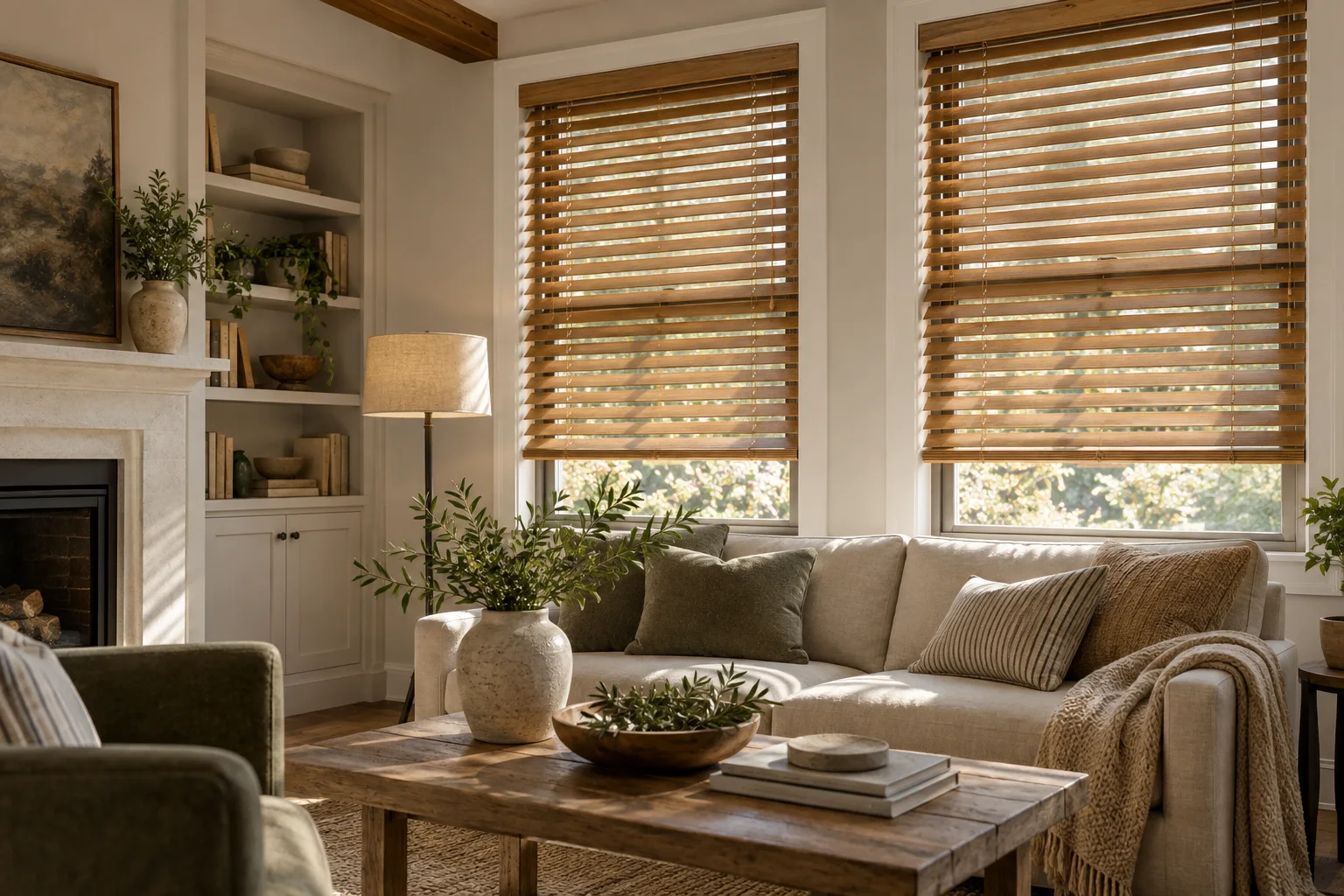
What is best for each room in a GTA home?
The best treatment depends on the room’s specific job. Shutters suit visible living areas where structure and privacy matter. Blinds and shades often offer more flexibility in bedrooms, kitchens, offices, condos, patio doors and windows that need remote control.
Living room
Plantation shutters, wood blinds, Roman shades or layered treatments. Check furniture clearance, trim and glare.
Bedroom
Blackout roller blinds, cellular shades or shutters with an added room-darkening layer. Check edge light and privacy.
Kitchen
Moisture-suitable faux-wood blinds, roller blinds or correctly specified shutters. Consider steam, splashes and cleaning.
Bathroom
Moisture-suitable blinds or shutters. Check humidity, ventilation, privacy and material care.
Home office
Roller, zebra, cellular or motorized blinds can help with screen glare and quick adjustment.
Condo
Roller, zebra, cellular, faux-wood or selected shutters. Check depth, exterior appearance rules and shared sightlines.
Patio door
Vertical blinds, sliding panels or another door-friendly covering. Check stacking space, traffic and handle clearance.
Bay or unusual window
Custom blinds, shades or carefully planned shutters. Check angles, frame depth, trim and separate operating sections.
For sliding doors, vertical blinds can be practical when clearance, stacking and frequent access are important. For kitchens and bathrooms, moisture and cleaning requirements should be discussed before selecting a material.
Are blinds or shutters better for condos?
Blinds are often more practical for condos because they can suit shallow frames, provide blackout or glare control and work with motorized operation. Shutters can still be a good choice when the frame depth, building rules, panel layout and furniture clearance allow them.
Condo windows may have strong sun exposure, nearby buildings or street lighting. Adjustable daytime privacy can be useful, while a blackout blind may be better for sleeping. Check with the condo corporation if installation affects exterior appearance, window frames or balcony doors.
When should you choose motorized blinds?
Motorized blinds are often the better choice for hard-to-reach windows, large openings, bedrooms, child-accessible areas and homeowners who want scheduled or remote control. Discuss battery access, charging, remotes, wall switches, smart-home compatibility and emergency manual operation.
What should you check before ordering?
- Identify the main goal for each window: privacy, glare control, blackout, insulation support or style.
- Check whether the window opens inward, tilts, cranks, slides or sits behind furniture.
- Measure frame depth and note trim, handles, locks, vents, radiators and nearby cabinetry.
- Choose the mounting position and confirm whether an inside or outside mount gives the better result.
- Ask how much light may enter around the edges and whether an additional layer is needed.
- Confirm material suitability for kitchens, bathrooms, pets, children and frequent use.
- Review cordless, chain, wand, remote, battery and smart-control options.
- Request a written quote covering the product, measurement, installation, warranty and inclusions.
Canadian window-covering safety requirements should also be part of the conversation. Ask which cordless or motorized options are suitable for your household and how accessible cords will be handled.
How does a custom consultation work?
A custom consultation normally starts with your priorities, followed by product and material recommendations for each room. The provider then measures the windows, reviews mounting and clearance, prepares a quote, confirms the order and arranges professional installation.
Lavish Blinds serves homeowners, condo owners and commercial clients from its Oakville location. The process includes consultation, on-site measurement and quotes, professional installation and completion. A mixed plan might use shutters in the living room, blackout roller blinds in bedrooms, cellular shades near cold glass and vertical blinds at patio doors.
Compare them in your own light
See what fits your rooms—not just a catalogue.
Bring a list of rooms, preferred darkness levels, privacy concerns and any windows that are difficult to reach.