

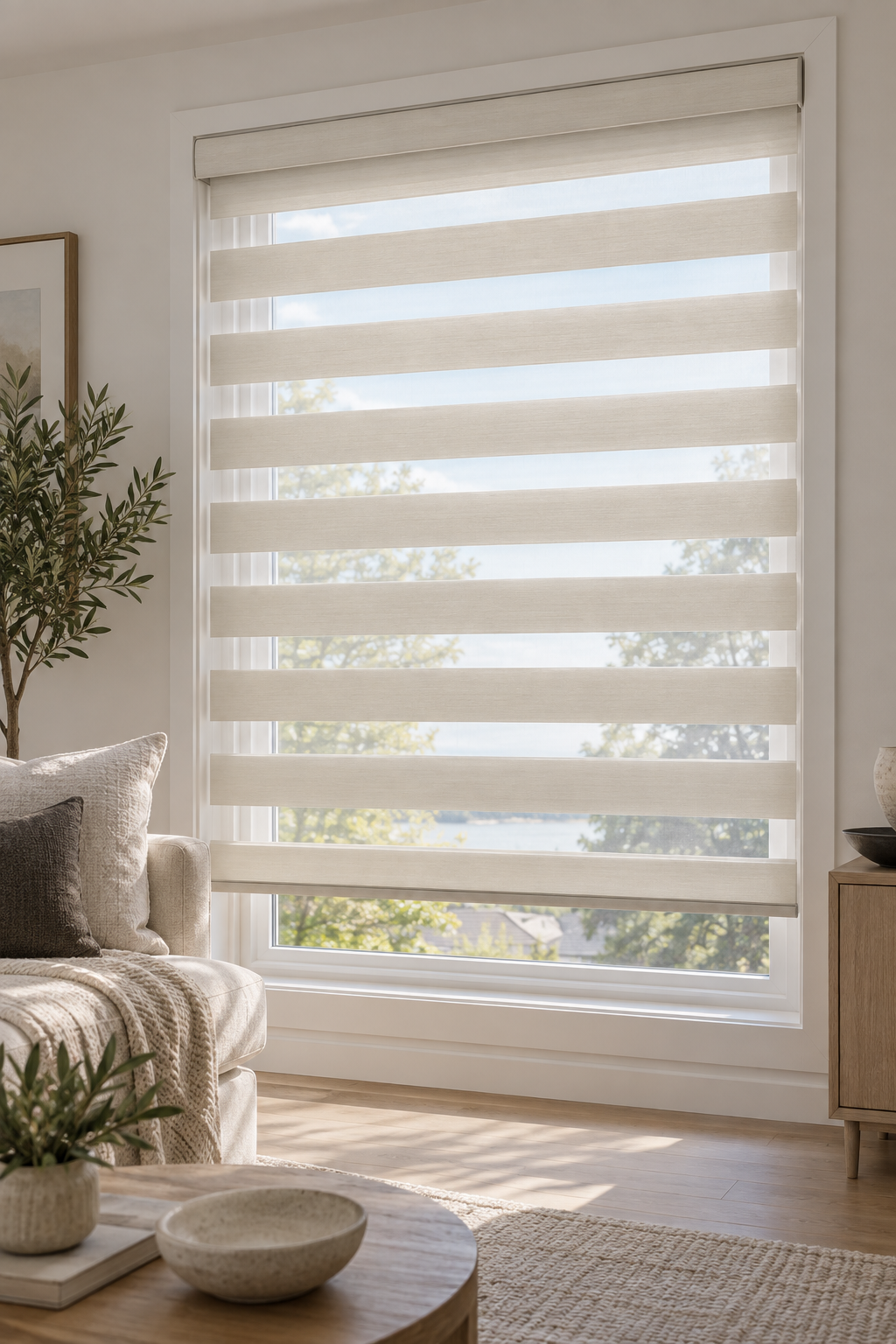
The best blackout window covering depends on more than the product label. Blackout roller blinds, shades, cellular shades, curtains, and motorized options can all reduce incoming light, but the result also depends on opacity, coverage, mounting position, window configuration, and gaps around the edges.
If you want near-total darkness, define your light-control goal first, then assess the actual window and room. A made-to-measure covering with suitable mounting can perform better than a standard product selected without considering the frame, trim, handles, or side gaps.
Quick summary

- Blackout roller blinds suit bedrooms, condos, and modern interiors where a clean profile matters.
- Cellular shades are worth considering when room darkening and window comfort are both priorities.
- Curtains or layered coverage may help reduce light entering around the sides or top of a blind.
- Motorized blinds can make high, wide, or difficult-to-reach windows easier to operate.
- Measurement and installation are central because light can enter through gaps even when the material is opaque.
What “blackout” really means
“Blackout” generally describes a covering intended to substantially limit incoming light. It does not guarantee that every room will become completely dark. Light may still enter between the covering and the frame, around the sides, above the headrail, below the fabric, or through gaps created by the mounting arrangement.
For a bedroom, ask how the material, coverage, mounting position, and made-to-measure fit work together. This blackout blinds for bedrooms comparison explains why edge gaps and installation details affect real-world room darkening.
Inside mounting can create an integrated appearance, but recesses, trim, handles, or window hardware may limit coverage. Outside mounting can extend beyond the opening and may help address some side gaps, although available wall space and room design still matter.
Blackout solutions compared at a glance

| Option | Best suited to | Strengths | Confirm before ordering |
|---|---|---|---|
| Blackout roller blinds | Bedrooms, condos, offices | Clean profile and straightforward operation | Opacity, side gaps, mounting, top and bottom coverage |
| Blackout shades | Rooms where fabric appearance matters | Choice of textures, colours, and configurations | Actual room-darkening performance and edge coverage |
| Cellular or honeycomb shades | Rooms where comfort and light control both matter | Pocketed structure may add an insulating layer | Fit, window condition, sun exposure, and blackout suitability |
| Curtains | Bedrooms, media rooms, layered interiors | Broad coverage and a softer appearance | Opacity, overlap, side returns, top coverage, mounting height |
| Motorized blinds or shades | High, wide, awkward, or frequently adjusted windows | Remote-controlled or automated operation | Power, controls, grouping, compatibility, and manual operation |
Curtains are included as a general comparison, not as a service attributed to Lavish Blinds. The supplied business information supports made-to-measure blinds, shades, shutters, and motorized solutions.
Blackout roller blinds: best for a clean profile
Blackout roller blinds are a strong shortlist option when you want the treatment to blend into a contemporary interior. Their flat profile can work well in bedrooms, condos, offices, and other rooms where a restrained appearance is more important than a decorative fabric treatment.
The fabric and installation approach deserve as much attention as the roller mechanism. Ask whether the fabric suits your required light-control level, how it will be mounted, and where light may enter around the sides or top. Lavish Blinds offers made-to-measure roller blinds with design guidance, measurement, quoting, and professional installation.
Cellular shades: when comfort matters alongside darkness
Cellular shades, also called honeycomb shades, use internal pockets that can add an insulating layer at the window. They are worth considering when the decision involves more than darkness, such as glare, seasonal comfort, or the feel of a cold or sunny window.
Cellular construction does not guarantee a particular energy-bill reduction. Results vary with the window’s condition, fit, sun exposure, room use, and operation. The cellular shade insulation discussion provides further context for weighing comfort alongside light control.
Curtains and layered coverage
Curtains can provide broad coverage when mounted above and beyond the window opening. Opaque fabric, overlapping panels, side returns, and careful positioning may reduce light entering around the edges of a blind.
Layering can provide flexible daylight control during the day and stronger darkness at night. A blind can handle privacy and adjustable light control while a curtain adds softness and wider coverage. The tradeoff is more wall space, fabric management, and cleaning.
Motorized blackout options
Motorized blinds or shades can help when a window is high, wide, behind furniture, or difficult to reach. They may also suit rooms where several coverings need to be adjusted together.
Before ordering, confirm the control method, power source, grouping options, manual override, installation requirements, and compatibility with your intended use. Automation cannot compensate for unsuitable coverage or poor fit.
Which solution fits your room?
Bedrooms
Blackout roller blinds or shades may suit bedrooms where a simple, darkened appearance is the priority. If light enters around the edges, consider outside mounting, wider coverage, or a complementary curtain.
Condos and compact rooms
A roller blind may work well when wall space is limited. Check frame depth, handles, trim, and recess dimensions before assuming inside mounting will provide adequate coverage.
Large glazed areas
Wide windows and sliding doors may require multiple coordinated blinds, vertical treatments, or motorized options. Assess stacking position, access, and how each section will operate without unwanted gaps.
Office presentation rooms
These spaces may need stronger light control than general work areas. Confirm whether the goal is reduced glare or a significantly darker room, then specify mounting, side gaps, control access, and room-by-room requirements.
Why measurement and installation affect performance
A blackout material cannot control light that enters around it. During measurement, assess the frame, trim, sill, handles, window depth, unusual dimensions, and space available for inside or outside mounting. Drafts, damaged seals, or other window problems may need separate attention.
Made-to-measure sizing and professional installation can help align the treatment with the actual opening and operating requirements. They do not eliminate every possible light gap, so discuss the expected result before ordering and ask where coverage will extend.
Questions to ask before ordering
- Do I need reduced glare, strong room darkening, or near-total darkness?
- Where might light enter around the sides, top, bottom, or between sections?
- Would inside or outside mounting suit this frame and room layout?
- Which material or fabric meets the required light-control level?
- Would a roller blind, shade, cellular shade, curtain layer, or combination fit best?
- Will operation be manual, remote-controlled, or automated?
- For motorized options, what controls, grouping, compatibility, and manual override are included?
- What does measurement and installation include?
- How will unusual windows, handles, deep sills, or large glazed areas be handled?
A short note on cord safety
Health Canada says new regulations for corded window coverings came into force in 2021 and advises replacing coverings with long accessible cords with newer options that do not have them. Review the official window covering safety guidance and ask about cordless or safer operating options.
Frequently asked questions
Can blackout blinds create a completely dark room?
Not necessarily. Gaps around the sides, top, bottom, or frame can still allow light into the room. Mounting, coverage, window configuration, and fit should be considered together.
Are cellular shades suitable for blackout and comfort?
They may be suitable if the selected product provides the required light control and fits correctly. Their pocketed structure may add an insulating layer, but results vary by window and installation.
Should blackout blinds be mounted inside or outside the frame?
Neither is universally better. Inside mounting can look integrated, while outside mounting may extend coverage beyond the opening. Trim, handles, wall space, and appearance must be checked.
Are motorized blackout blinds worth considering?
They are worth discussing when manual operation is awkward or several windows need coordinated adjustment. Confirm power, controls, grouping, compatibility, and installation requirements.
What should I ask about light gaps?
Ask where the treatment will sit, how far it will extend beyond the opening, what gaps are expected, and whether handles, trim, sills, or multiple sections affect coverage.
How to make your final choice
Choose based on the room’s purpose and the window’s physical constraints. A bedroom may favour a blackout roller blind or shade, a comfort-focused room may justify cellular shades, and a high office window may benefit from motorized operation. Curtains or layering can help when broader coverage and a softer appearance matter.
Before ordering, compare samples, define your darkness goal, review mounting options, and ask specifically about side and top gaps. An on-site measurement and quote can connect the product choice to the real window.
For design guidance, made-to-measure window coverings, on-site measurement, a quote, and professional installation in the Greater Toronto Area, contact Lavish Blinds to discuss the solution that best fits your room and windows.